When Do You Think About Integration in Your ServiceNow Projects?
Key Takeaways:
- Integration planning deferred past Day 1 consistently creates budget overruns, go-live delays, and long-term technical debt
- Most enterprise ServiceNow implementations involve 20 to 30 peripheral systems that need ServiceNow data
- Configuration-based integration reduces per-system delivery from weeks of custom development to hours of setup
- Swiss Post integrated 30 systems using this approach, handling 100,000+ daily requests with 2+ years of production stability
- Four questions asked during project scoping determine whether integration becomes a competitive advantage or a cost center
Day 1 or Day 90? When Integration Planning Actually Happens
Most organizations defer integration planning. The initial focus goes to core ServiceNow capabilities like incident management, change workflows, and the service catalog. Integration with peripheral systems gets labeled as "phase two" or "we will figure that out later." By the time teams realize they need a comprehensive integration architecture, they are already months into implementation with limited flexibility to adjust the approach.
This deferral creates predictable problems. Integration becomes a bottleneck that delays go-live dates. Budgets get consumed by custom development that was not adequately scoped. Peripheral systems accumulate technical debt through quick fixes. And the broader IT ecosystem cannot benefit from ServiceNow data because data does not flow effectively.
ServiceNow as Your IT Hub: What That Really Means
When organizations adopt ServiceNow, they typically do so to centralize and modernize IT service management. The platform becomes the system of record for configuration management, change processes, incident tracking, and knowledge management. This centralization delivers standardization, automation, and visibility.
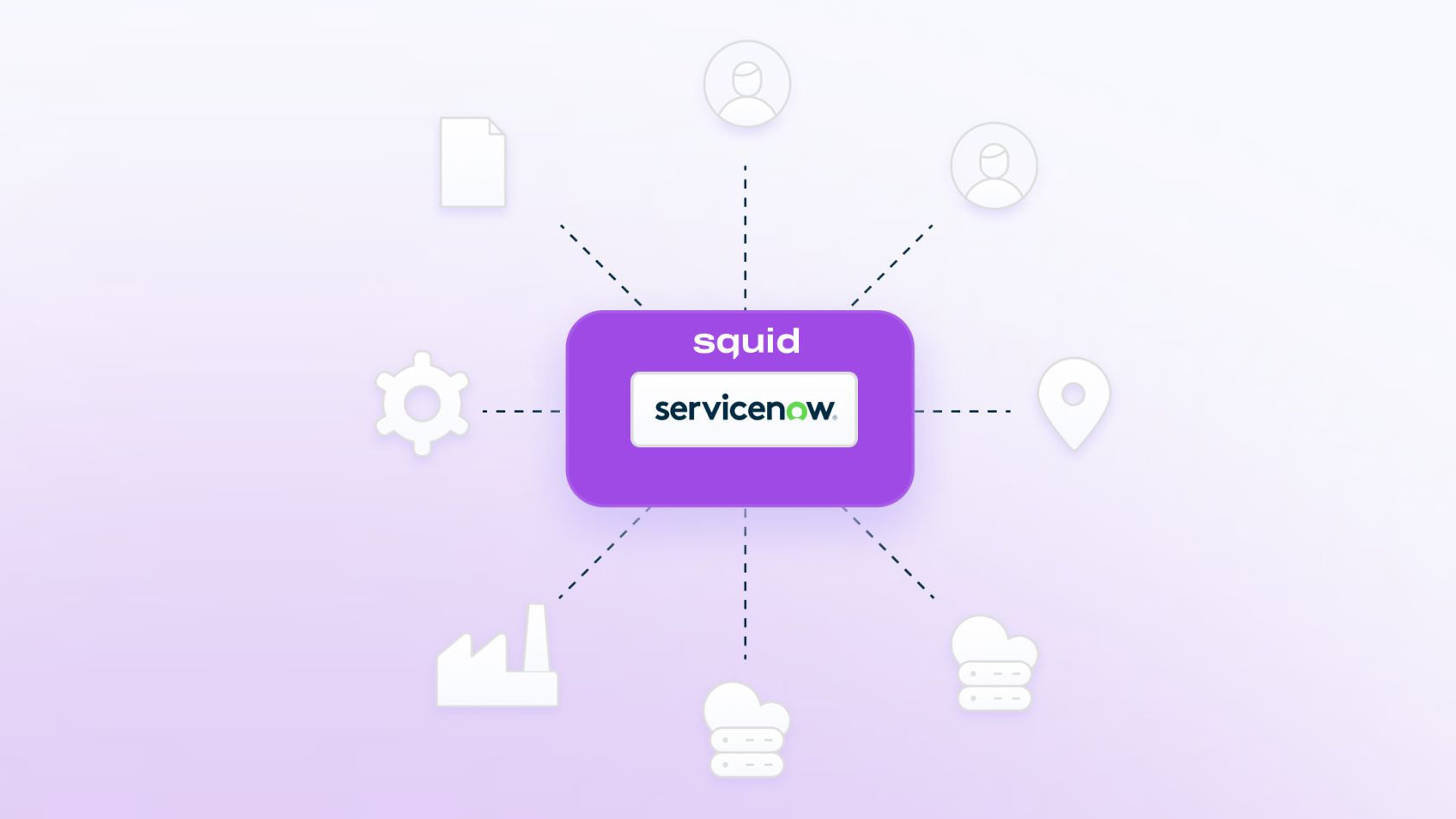
However, ServiceNow rarely operates in isolation. It usually sits at the center of a complex IT ecosystem that includes security applications, monitoring tools, cost allocation systems, DevOps platforms, and business-specific applications. These peripheral systems depend on ServiceNow data to function effectively. A firewall management system needs current server configurations. A cost allocation system needs service relationships and usage patterns. A DevOps platform needs change approval status.
When you position ServiceNow as your IT hub, you implicitly commit to solving the integration challenge. The question is not whether integration will happen, but how sustainably you will approach it.
The 30 Peripheral Systems Challenge
Across enterprise ServiceNow implementations, a consistent pattern emerges: most organizations have 20 to 30 peripheral systems that require ServiceNow data. The exact number varies by industry and complexity, but the magnitude remains remarkably consistent.
These are not trivial integrations. Some systems need basic configuration item data. Others require complex relationships across multiple tables. Some need real-time access. Others work with scheduled exports.
When integration planning happens late, teams discover this complexity under intense time pressure. Go-live dates are fixed, and integration was never fully scoped. The typical response is tactical fixes that "just make it work." Those fixes become long-term technical debt and quietly erode margins through years of maintenance.
Why Configuration-Based Integration Changes the Equation
Solutions like Squid address this challenge with configuration-based integration that scales without custom development. Instead of quoting weeks of API development for each system, teams can quote hours of configuration.
When Swiss Post planned their integration architecture, they faced a clear choice: build approximately 30 custom REST APIs at two to three weeks each, or use a configuration-based approach that handled all systems uniformly. They chose configuration, because it delivered faster project delivery, better margins, and happier clients. Early architectural thinking prevented the accumulation of technical debt and avoided 30 one-off solutions.
Planning Integration Architecture During Project Scoping
Integration strategy should be addressed during project scoping, not after implementation starts. There are four key questions to ask early.
What peripheral systems need ServiceNow data? Include both obvious and non-obvious dependencies: monitoring, security, finance, reporting, and business intelligence tools.
What data does each system need? Some require basic records. Others depend on complex relationships. This clarity influences architecture decisions and highlights data quality issues early.
How real-time are the requirements? Real-time integrations impose different constraints than scheduled exports and influence infrastructure choices.
What is the long-term integration trajectory? Most organizations start with around 20 systems and grow from there. Architecture must scale without redesign.
When these questions are addressed early, teams can make informed architectural decisions, allocate realistic budgets, sequence implementation logically, and avoid long-term technical debt.
Turning Integration from Cost Center to Competitive Advantage
When data flows efficiently between ServiceNow and peripheral systems, the entire IT ecosystem becomes more effective. Changes include appropriate security controls. Service costs are allocated accurately. Monitoring aligns with service management.
This creates value beyond ServiceNow itself: more efficient IT operations, better business visibility, and improved strategic decision-making. The key shift is viewing integration as a strategic capability rather than a technical afterthought.
The Implementation Approach That Scales
Scalable integration balances immediate go-live needs with long-term sustainability. Configuration-based integration achieves this balance because new systems require adding configurations rather than writing code, changing requirements mean updating configurations rather than rewriting logic, and platform upgrades do not require rewrites.
Swiss Post demonstrated this at scale, integrating approximately 30 systems including security tools, cost allocation platforms, DevOps, telephony, and monitoring. With 200+ pre-built patterns for common ServiceNow data structures, Squid enabled teams to define what data was needed, not how to code it.
Most integration requirements follow predictable patterns: configuration data, relationships, change status, user information. Solving these with configurations creates reusable capabilities that compound efficiency over time.
The ROI of Upfront Architecture
Early investment in integration architecture delivers measurable ROI across the project lifecycle.
| Aspect | Custom Code Approach | Configuration-Based Approach |
|---|---|---|
| Maintenance | Ongoing developer effort | Minimal ongoing effort |
| Developer dependency | High | Low |
| Change cycles | Slow | Fast |
| Knowledge transfer | Locked in code | Accessible to the team |
This operational efficiency compounds over time and frees teams for higher-value work.
Making the Strategic Case
To gain organizational support, the integration case must resonate with both technical and business stakeholders.
For business stakeholders, the case centers on risk reduction, lower total cost of ownership, sustainable architecture, and better team utilization. For technical stakeholders, the case is about scalability from 5 to 30 or more systems without architectural redesign, reduced dependency on specialized developers, and maintainability over time.
Positioned correctly, integration planning becomes a cost-control and risk-mitigation strategy, not a technical discussion.
The Win-Win of Early Planning
Strategic integration planning benefits both delivery teams and clients.
For delivery practices, it means quoting hours instead of weeks, freeing senior developers for strategic work, building reusable IP across projects, winning competitive bids, and differentiating with enterprise-scale capability.
For clients, it means faster time-to-value, lower costs, upgrade-safe integrations, and reduced technical debt. Swiss Post's 30-system integration delivers 100,000+ daily requests with multi-year production stability, all without months of custom development.
Your Integration Planning Checklist
Step 1: Comprehensive System Inventory. List all systems that consume or could benefit from ServiceNow data.
Step 2: Document Data Requirements. Define what each system needs and how it currently integrates.
Step 3: Evaluate Integration Approaches. Consider system volume, complexity, team capacity, and maintenance appetite.
Step 4: Establish a Strategic Framework. Create decision criteria that guide future integration decisions.
Day 1 vs. Day 90: Planning Comparison
| Aspect | Plan at Day 1 | Defer to Day 90 |
|---|---|---|
| Budget Accuracy | High | Low |
| Timeline Risk | Low | High |
| Technical Debt | Minimal | High |
| Team Efficiency | Optimized | Reactive |
| Margin Impact | Positive | Negative |
| Client Satisfaction | High | Variable |
The Path Forward
Integration will happen. The only choice is whether it happens strategically or tactically.
Strategic planning delivers sustainable architecture, accurate estimates, and lower maintenance costs. Tactical integration creates technical debt, budget overruns, and ongoing operational pain. Your ServiceNow investment deserves better.
Ready to make integration planning a competitive advantage? Book a 15-minute demo to see how Squid handles enterprise-scale integration, or start your free trial directly from the ServiceNow Store.