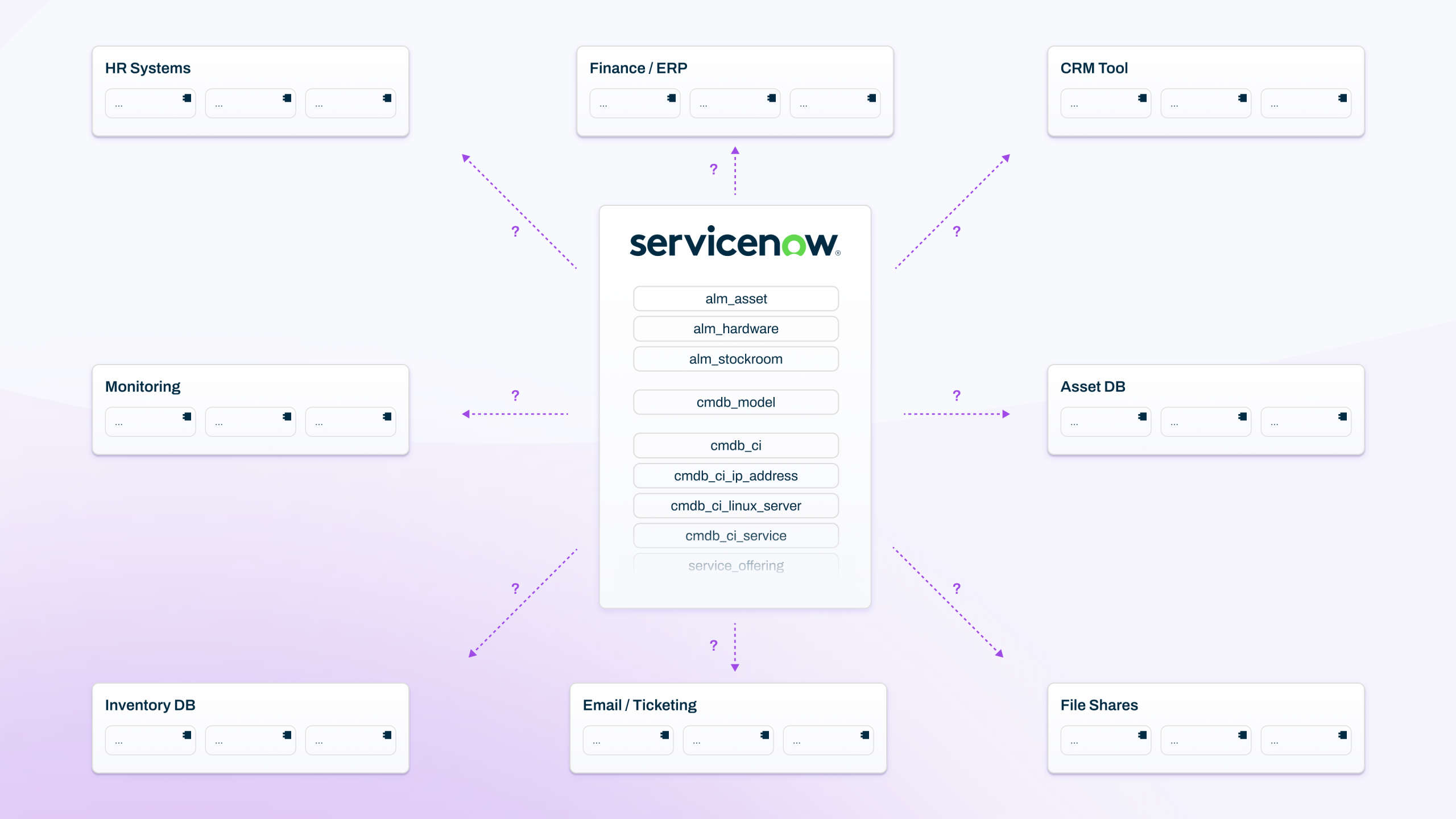
You quote conservatively because custom integration development is unpredictable. A simple data export might take three days or three weeks, depending on what you discover mid-project. Your clients expect precise timelines, but ServiceNow data integration rarely cooperates.
The math tells the story. At $200 per hour for integration work, a two-week custom development project costs your client $16,000. When that same integration can be configured in 90 minutes, you are looking at $300. The difference changes how you bid, how you staff projects, and ultimately, how profitable your ServiceNow practice becomes.
The Margin Impact of Speed
Integration speed affects your bottom line beyond hourly billing. When integrations deploy in hours instead of weeks, your technical team focuses on higher-value ServiceNow work—workflow automation, service catalog design, process optimization. These projects command premium rates and build long-term client relationships.
Consider a typical ServiceNow implementation where 30 peripheral systems need data access. Using traditional custom REST API development, you estimate 5-10 days per system, or roughly 150-300 days of development effort. Even with a small team working in parallel, this represents months of calendar time and hundreds of thousands in labor costs.
Configuration-based approaches change this equation fundamentally. Simple integrations requiring basic data exports take 10-30 minutes to configure. More complex requirements involving multiple table relationships might take 2-3 hours.
The majority of integration work happens upfront during scoping—understanding what data each system needs and why. The technical implementation becomes the easy part.
Real Numbers from Production
Swiss Post faced exactly this challenge when modernizing IT service management with ServiceNow. Approximately 30 peripheral systems remained operational: security applications, cost allocation systems, telephone management, DevOps platforms, monitoring tools. All needed integration without disrupting production operations.
Traditional custom development would have required 5-10 days per system—150 to 300 days of development effort total. The organization instead used Squid's configuration-based integration, dramatically compressing the timeline from months of custom development to weeks of configuration work.
Key Production Metrics:
-
100,000 requests daily handled in production
-
100 million data entities transferred
-
2+ years of stable operation
-
Minimal operational maintenance required
-
30 peripheral systems integrated
Today, that production environment runs at this scale with remarkable stability. When you can reference this kind of scale and stability in your proposals, you reduce perceived risk for buyers while demonstrating a credible technical foundation.
Building a Configuration Library That Scales
The strategic advantage extends beyond individual project speed. Configuration-based integration creates reusable intellectual property. A configuration library with 200+ pre-built patterns means your team can quickly assemble solutions for new clients without starting from scratch each time.
This is where system integrators gain competitive advantage. Custom code requires developers with specialized ServiceNow knowledge—scarce and expensive. Configurations can be managed by mid-level technical staff who understand data relationships and business requirements.
You reduce dependency on senior technical talent while improving delivery predictability.
Your configuration library becomes a competitive asset when bidding new work. You can confidently quote faster timelines because the technical foundation exists. While competitors estimate conservatively with weeks of custom development, you present a credible path to delivery measured in days, not months.
Calculating the Margin Impact
The financial mathematics favor configuration-based approaches significantly when you work through actual project numbers.
Scenario: 30-system integration project
Custom development approach:
-
30 systems × 7 days average per system = 210 developer days
-
210 days × 8 hours = 1,680 billable hours
-
1,680 hours × $200 = **$336,000 in integration costs**
-
Timeline: 6-8 months with 3-person team
Configuration-based approach with Squid:
-
Initial setup: 8 hours ($1,600)
-
Simple systems (20): 30 minutes each = 10 hours ($2,000)
-
Complex systems (10): 2 hours each = 20 hours ($4,000)
-
Total: 38 hours = $7,600 in integration costs
-
Timeline: 2-3 weeks
Net difference:
-
$328,400 saved in development costs
-
5-6 months saved in delivery time
This is not theoretical. These numbers reflect actual project economics when configuration-based approaches replace custom development for data integration patterns.
Competitive Bidding Advantage
Speed creates strategic positioning in competitive situations. When prospective clients evaluate multiple system integrators, timeline and cost are primary decision factors.
If you can demonstrate a credible approach to integrating 30 systems in compressed timeframes while competitors quote months of work, you differentiate immediately.
More importantly, you can structure proposals that shift budget from integration development to higher-value services. Instead of allocating 60 percent of the project budget to data integration, you might allocate 20 percent, freeing resources for process redesign, training, and change management. This makes your proposal more attractive while maintaining healthy margins.
The confidence in compressed timelines comes from production-validated approaches, not optimistic estimation. When you can point to systems handling 100,000 daily requests in production environments, you demonstrate capability rather than promise potential.
Team Productivity Gains
The operational impact on your technical team deserves attention. Developers who would normally spend weeks writing and debugging custom integration code can focus on complex ServiceNow implementations requiring their expertise.
Configuration-based integration does not eliminate the need for technical skill, but it reallocates that skill to where it creates the most value.
For project managers, predictable integration timelines reduce project risk. Custom development introduces variables difficult to estimate accurately:
-
Will data relationships be straightforward or complex?
-
Will the peripheral system API be well-documented or require reverse engineering?
-
Will unexpected authentication challenges emerge?
Configuration-based approaches answer these questions early in the scoping phase, when you define what data each system needs. Technical implementation risk drops dramatically.
Your delivery teams appreciate the reduced stress. When integration work is predictable and fast, project schedules become more reliable. Teams can plan work with confidence rather than constantly adjusting timelines based on custom development delays.
From Cost Center to Profit Center
Integration work has traditionally been viewed as a necessary cost center in ServiceNow implementations. Clients need it, but they resist paying premium rates for what they perceive as technical plumbing.
When you can deliver integration faster and more reliably, you shift the conversation.
Fast integration delivery demonstrates technical competence and project management capability. Clients who see you complete integration work ahead of schedule develop confidence in your ability to deliver the entire project successfully. This credibility often leads to expanded scope and longer-term engagements.
The financial impact compounds across your practice. If you deliver 20 ServiceNow implementations per year, and each includes integration for 20-30 peripheral systems, the cumulative time savings represents significant margin improvement. Those savings can be reinvested in sales, training, or capability development. They can also flow directly to profitability.
Making the Case Internally
Within your organization, the case for configuration-based integration needs to address both technical and business stakeholders. Technical leaders want to know it works at scale and does not introduce new risks. Business leaders want to understand margin impact and competitive positioning.
Production validation addresses both concerns:
-
Systems handling 100,000 daily requests demonstrate technical reliability
-
Projects compressing 6-month timelines into 2-3 weeks demonstrate delivery speed
-
Minimal ongoing operational maintenance demonstrates total cost of ownership advantages
For your internal stakeholders, the value proposition becomes clear. Faster delivery, lower cost, reduced risk, improved margins. You can bid more aggressively on competitive opportunities while maintaining profitability. You can free technical talent for higher-value work. And you can build reusable configurations that become intellectual property assets.
The Path Forward
Speed in integration delivery is not about cutting corners or reducing quality. It is about using the right technical approach for the problem at hand.
When peripheral systems need structured data from ServiceNow, configuration-based solutions deliver faster, more reliably, and with less ongoing maintenance than custom code.
The competitive advantage comes from recognizing this reality before your competitors do. System integrators who adopt configuration-based approaches can quote faster timelines, deliver more predictably, and operate at healthier margins. Those who continue relying primarily on custom development will find themselves at a disadvantage in competitive bidding situations.
For your ServiceNow practice, the question is not whether to adopt faster integration approaches, but how quickly you can build the internal capability and confidence to quote aggressively in competitive situations. The market is moving toward faster, more efficient integration. Position your practice to lead that transition.
Squid enables this transformation by reducing ServiceNow data integration from a custom development challenge to a configuration exercise. When integration timelines compress from months to weeks, your entire practice economics change.
For implementation guidance:
-
ServiceNow REST API Documentation - Official ServiceNow integration documentation
Ready to compress your ServiceNow integration timelines from months to weeks? Contact our technical team for a 15-minute consultation on your specific integration challenges.